
If you are a corporate lawyer or a corporate executive entrusted by your employer to handle contracts, a Non-Disclosure Agreement (NDA) is the contract you will see the most number of times in your life!
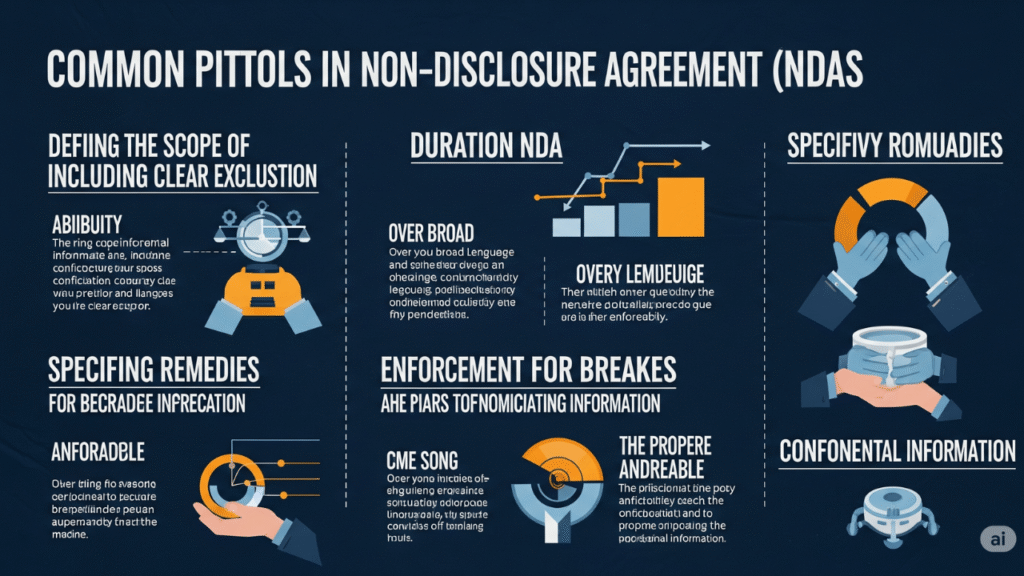
Some common pitfalls or issues that can arise in an NDAs:
Ambiguity. If an NDA is not clear and specific about what information is to be kept confidential, it can lead to misunderstandings and disputes. Therefore, the scope of what constitutes Confidential Information and what does not, should be utmost clear.
Too broad / restrictive. An NDA that is overly broad in its scope or overly restrictive in its terms can limit the ability of the parties to conduct business as usual, leading to operational difficulties.
Exceptions. An NDA should include provisions for certain exceptions, such as information that is already in the public domain or becomes public through no fault of the receiving party, or disclosure as per legal requirements. In the absence of these exceptions, the recipient may be in dilemma from time to time and some may even take undue advantage.
Duration. If the duration of the confidentiality obligations is not clearly defined or is unreasonably long, it creates challenges for the parties.
Enforcement. The absence of clear provisions for enforcement and remedies in the event of a breach, taking legal action and recovering damages in case of a breach becomes tough.
Non-compliance. NDAs should comply with applicable laws and regulations, including those related to competition, trade secrets, and data protection.
Tread carefully.
