
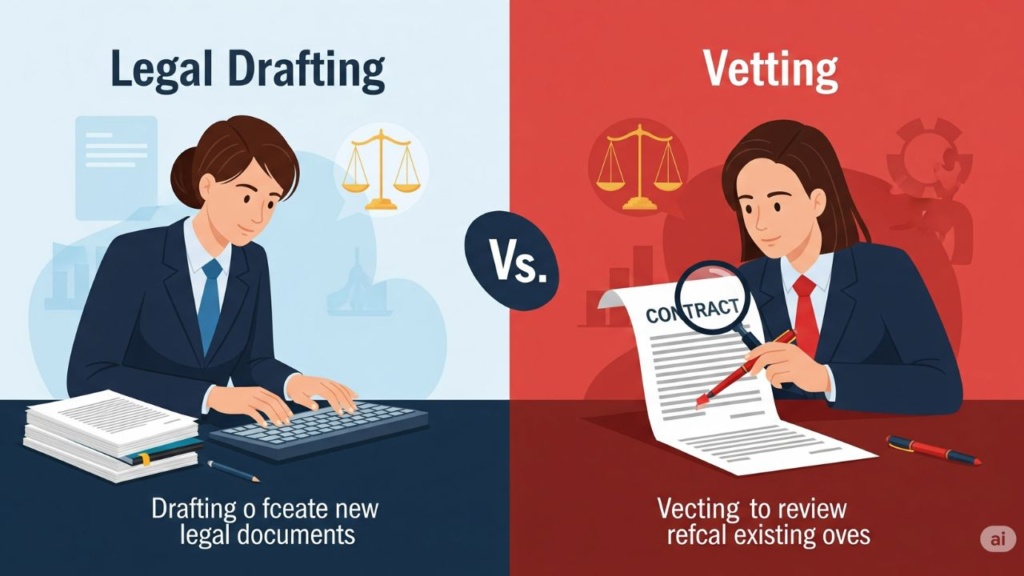
Before one gets to start drafting, the parties to a contemplated transaction must decide as to who will draft the agreement. Usually, parties are hesitant to discuss this. It is somehow assumed that the bigger party (older and more established) will issue the first draft and the other(s) will provide their inputs or suggestions, if any.
If your client has an upper hand and negotiation leverage, invariably you will be asked to draft. Customs and practice also have their hand in such matters. Mostly, the party which has the financial muscle power or whose money, property, technology, etc. are at stake would like to keep the drafting keys for itself and let the other party only make comments on the draft.
For example, you may have noticed that:
(i) the employer always issues the employment letter / agreement;
(ii) the bankers always provide a draft of the loan agreement;
(iii) in a technology license agreement, the licensor will provide the draft;
(iv) all the software licence agreements are drafted by the service providers.
The above are only a few examples.
If however, there is an option for your client to take responsibility for drafting an agreement, you should advise your client to go ahead. If drafted and negotiated properly, your client is likely to get the first mover advantage.
This way, your client not only gets a clean slate or a big canvas to incorporate the provisions which have already been discussed and agreed, but also incorporate issues that are most relevant to it but may not have been discussed so far. You could keep your clients’ concerns and interest in mind and draft the terms in a way that brings advantages to your client without changing the basic terms of the ‘handshake’ deal. As said earlier, you have a clean slate so you can write as much relevant stuff as you want to.
If you have drafted comprehensively incorporating all the concerns and benefits of your client, the other party or their lawyer may or may not be questioning all of them. For the ones where questions are raised, the other party has to justify its objections and negotiate deletion or dilution thereof. Even if negotiation results in some deletions or dilutions, your client would be in a good position.
Compare this with the opposite scenario. If the other party sends you a draft, you have to discuss it with you client, find gaps and negotiate addition of your client’s (missing) issues in the draft.
Out of the two, which situation is better?
A great cricket legend once said, ”If you do not know how the pitch will behave and you win the toss, always opt for bating.” It is the same with drafting. Given an option, you should draft, rather than vet the other party’s draft.
