
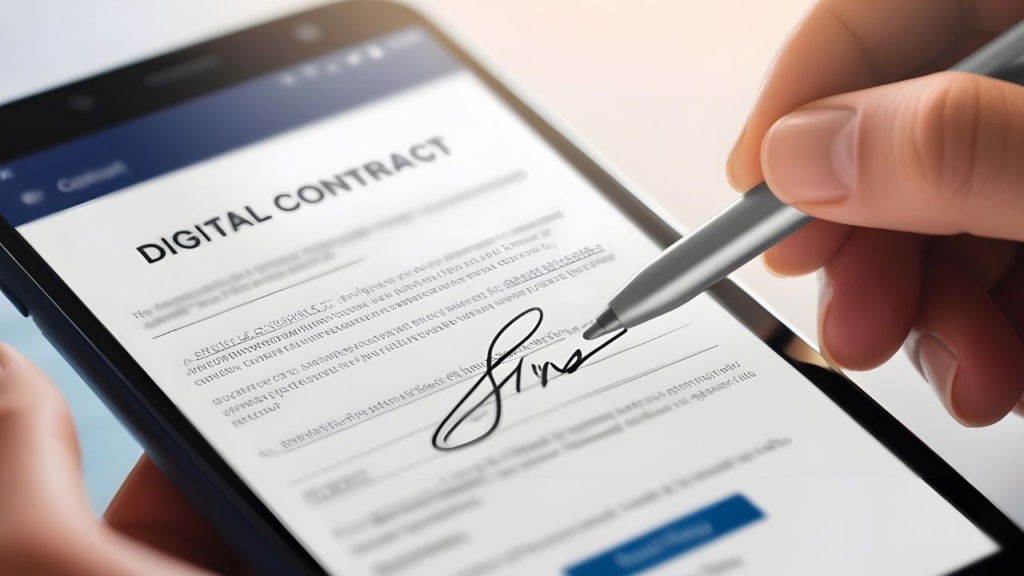
Signed and Sealed.
What does it mean in context of a contract?
It signifies completion of the drafting, reviewing and negotiation process, arriving at a win-win stage and the takeoff stage for the relationship/transaction/promise envisaged under the contract. A contract is the official face of such relationships.
Unless the parties have already started acting on a contractual relationship (minus a written contract), to make a contract binding and effective between them signing the contract is necessary for evidence, recordkeeping and other purposes.
Before signing a contract, parties go through different rounds of discussions and negotiations – it provides a definite and final shape to the contract as well as a ready to execute situation. Once a contract is ready to execute, then parties sign and execute the contract (in legal terminology).
Signature process is a crucial step in the entire contract lifecycle as a properly signed contract is a no brainer for bring a contract to life.
Signature process does not mean you can simply put a signature on the contract and feel the job is done for you.
One must be aware of signature process to properly execute contracts. Some of the crucial aspects with respect to signature process of a contract as follows:
a) Signature: Signature is an identification reflecting the identity of a party who signed the contract and such party’s official written consent and acknowledgement to abide by the terms and conditions of the contract. A signature can be scripted with special characters, signs or loops to the extent it is consistent.
b) Signatory: Signatory is a person who will sign the contract with a signature mark of his/her own. In order to sign a contract, a person should attain age of 18 years and of sound mind and clean consciousness.
c) Signature block: It contains details of names of parties and signatories, designation of the signatories, date and place of execution. Signature block typically will be placed on the last page of the contract, in some contracts, it is placed in first page also.
d) Signature date: Signature date is the date on which a party or parties will sign the contract.
e) Requirement of a signature: A signature is required to ensure a party agrees to abide by a contract by signing a contract. Typically, parties require to sign at signature block of a contract – however sometimes, a party needs to put a signature on each page or clause of a contract to signify that such party has read and understand page or clause and then signed the contract.
f) Authority: The signatories must have proper authority to execute the contract if they are acting on behalf of a corporate entity or another individual. Any execution without such authority would be void.
g) Validity of a contract: A contract will be valid and effective on the day all legally competent parties sign and execute the contract. Parties can sign a contract on same date or different dates, in case of different dates, last signed date is contract validity date.
h) Witness signature: Witness signature is another important aspect which will reflect a testament of a witness that such witness has witnessed the execution of a contract by the parties.
i) Read the contract: Prior to executing a contract, most important thing to do is to read each word and sentence of a contract and understand the implications of such words or sentence on a party upon execution a contract. This habit of reading will help to understand rights, obligations and liabilities of a party as putting a signature on a contract without knowing such things is an invitation to any unforeseen liability or obligation. Reading and understanding the contract is the best way to avoid any unpleasant surprises in the form of any liability or obligation.
j) Valid signature: Always ensure your signature is a legible one and difficult to tamper and valid one. Unclear and non-legible signature may make the contract invalid and unenforceable, so it is crucial to ensure signatures are properly inked or signed on a contract to rule out any prospect of challenging validity of a signature.
