
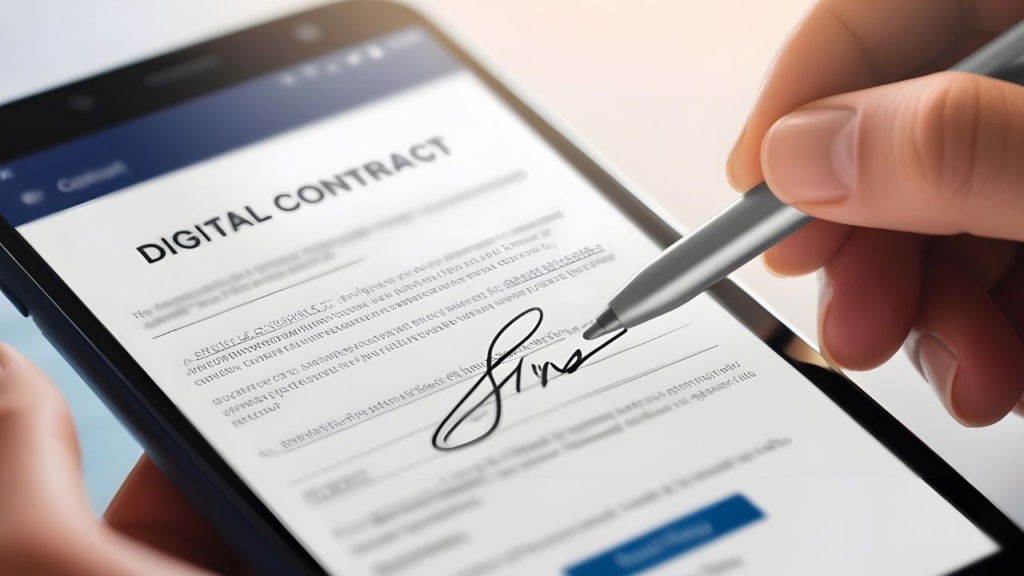
Electronic contracts are a burgeoning area of contract law, especially because they form the backbone for e-commerce, which is itself flourishing. What we know as e-commerce today began in the 1990s with the introduction of the World Wide Web, and was popularised in India by the offerings of Rediff and IRCTC. However, e-contracts have been around for longer than the internet.
In essence, an e-contract is just a contract over an electronic medium, including older technologies such as telephones, faxes, and telexes. For contract formation, different rules for offer and acceptance apply to different media. Courts in India and abroad agree that some modes such as telephones and faxes are instantaneous and require acceptance to be received by the proposer for concluding an e-contract. The instantaneous of e-mails is controversial, with some scholars opining that the postal rule used for normal mail should apply to e-mail as well.
When it comes to e-standard form contracts, there are 3 main types: click-wrap, browse-wrap, and shrink-wrap contracts. All of these types have been held to be valid by Courts in different cases, however, click-wrap contracts are most consistently enforced because they compel the acceptor to expressly assent to the terms of the contract by clicking on a button after perusing them.
The growth of e-contracts also brought to fore the reality that existing contract law did not contemplate electronic modes of contract formation, hence, many of its rules lead to complications when applied to e-contracts, and the very validity of an e-contract was not guaranteed. Therefore, the 1990s and early 2000s saw nations drafting legislation to cater to e-contracts and e-commerce in general.
UNCITRAL’s Model Law on Electronic Commerce proved to be vital in these endeavours, and its articles acted as models for the provisions of similar laws in developed jurisdictions such as Europe and the US, and also India. The primary idea behind the Model Law is functional equivalence, which is an analysis of the functions of legal requirements for paper-based contracts, such as requirements for written contracts, and signed documents. Once the function of such a requirement is determined, equivalent electronic techniques can be used to fulfil it.
The Model Law recognises the validity of electronic records, contracts, and signatures. Similarly, in India, the Information Technology Act, 2000 affirms the validity of electronic records and contracts, as well as digital signatures. Amendments have also been made to the Indian Evidence Act to provide for the admissibility of electronic records as evidence in legal proceedings.
Even though the enforceability of e-contracts has been recognised, challenges still exist for parties using them. Two common issues are determining the jurisdiction of the Courts in case of a dispute and protecting parties from unfair terms. In India, the jurisdiction of domestic e-contracts can be determined with the aid of the IT Act, which does provide for determining the place of contract formation.
However, if the contract is international in nature, choice of law and forum clauses are used to determine the law which governs it. As for unfair contracts, the Indian Contract Act does not provide for the invalidation of a contractual term merely on the ground of unfairness, unlike statutes in several other countries. The Law Commission noted this lacuna and prepared a draft bill to tackle both substantive and procedural unfairness in contracts, which was proposed in Parliament but has not yet been enacted.
However, the Consumer Protection Act has been amended to provide for the invalidation of unfair contractual terms which impose any unreasonable obligations on consumers. This Act is restricted only to consumer contracts and does not maintain the Law Commission’s distinction between substantive and procedural unfairness, but it is an important step which can protect the ever-growing number of online shoppers.
